
हड्डी टूटने के बाद क्या करें? फ्रैक्चर के इलाज की पूरी जानकारी
सड़क दुर्घटना, गिरने, खेल के दौरान चोट लगने या किसी भारी वस्तु के लगने से अचानक हड्डी में फ्रैक्चर हो सकता है। फ्रैक्चर के बाद सही समय पर उचित चिकित्सा सहायता लेना और घायल हिस्से की सही देखभाल करना जटिलताओं को कम करने और हड्डी के उचित उपचार में मदद कर सकता है।
यदि आपको या आपके परिवार के किसी सदस्य को फ्रैक्चर होने की आशंका है, तो चोट को नजरअंदाज नहीं करना चाहिए, भले ही दर्द बहुत अधिक न हो।
हड्डी का फ्रैक्चर क्या होता है?
फ्रैक्चर का अर्थ है हड्डी का आंशिक या पूरी तरह टूट जाना। यह एक छोटी दरार से लेकर हड्डी के पूरी तरह टूटने तक हो सकता है, जिसमें हड्डी अपनी सामान्य स्थिति से हट भी सकती है।
फ्रैक्चर के सामान्य कारणों में शामिल हैं:
- सड़क दुर्घटना
- गिरना
- खेल के दौरान चोट
- कार्यस्थल पर लगी चोट
- किसी भारी वस्तु या सीधे आघात से चोट
- हड्डियों का कमजोर होना, जैसे ऑस्टियोपोरोसिस
फ्रैक्चर के सामान्य लक्षण
फ्रैक्चर होने पर निम्न में से एक या अधिक लक्षण दिखाई दे सकते हैं:
- तेज या लगातार दर्द
- चोट वाली जगह पर सूजन
- नीला पड़ना या त्वचा के रंग में बदलाव
- घायल अंग को हिलाने में परेशानी
- पैर पर वजन डालने में कठिनाई
- अंग का आकार असामान्य दिखाई देना
- चोट वाली जगह पर छूने से अधिक दर्द
- हिलाने पर असामान्य रगड़ या घर्षण जैसा महसूस होना
हालांकि, हर फ्रैक्चर में स्पष्ट लक्षण दिखाई दें, यह जरूरी नहीं है। इसलिए फ्रैक्चर की आशंका होने पर डॉक्टर से जांच करवाना आवश्यक हो सकता है।
फ्रैक्चर की आशंका होने पर तुरंत क्या करें?
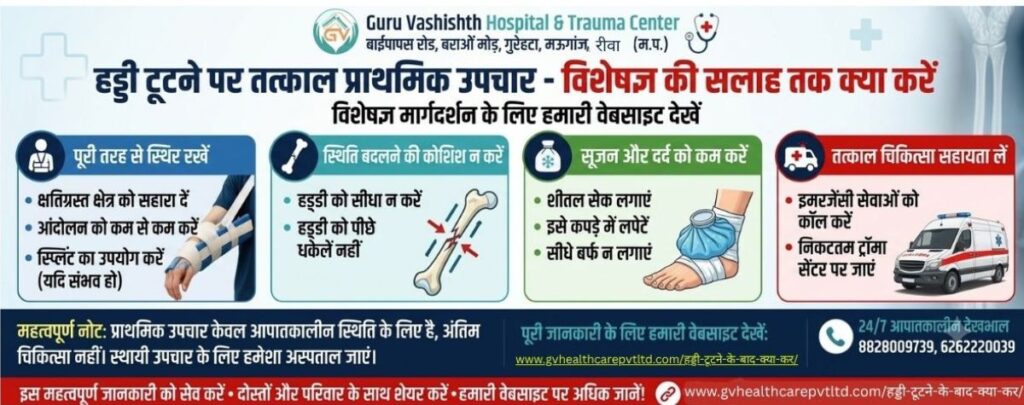
1. घायल हिस्से को स्थिर रखें
घायल हाथ या पैर को अनावश्यक रूप से न हिलाएं। संभव हो तो उसे उसी स्थिति में सहारा दें, जिसमें वह है।
2. हड्डी को स्वयं सीधा करने की कोशिश न करें
यदि हड्डी अपनी जगह से खिसक गई है, तो उसे स्वयं वापस सही जगह पर लगाने की कोशिश न करें। इससे नसों, रक्त वाहिकाओं, मांसपेशियों और आसपास के ऊतकों को अतिरिक्त नुकसान हो सकता है।
3. खून बह रहा हो तो उसे नियंत्रित करें
यदि चोट के साथ घाव है, तो उसे साफ कपड़े या ड्रेसिंग से ढकें। आवश्यकता होने पर घाव के आसपास हल्का दबाव देकर रक्तस्राव को नियंत्रित करने की कोशिश की जा सकती है। बाहर निकली हुई हड्डी पर सीधे दबाव न डालें।
4. सूजन के लिए ठंडी पट्टी का उपयोग करें
कपड़े में लपेटकर ठंडी पट्टी लगाने से सूजन कम करने में मदद मिल सकती है। बर्फ को सीधे त्वचा पर न लगाएं।
5. जल्द से जल्द चिकित्सकीय सहायता लें
फ्रैक्चर की आशंका होने पर योग्य डॉक्टर से जांच करवाना आवश्यक है। चोट की स्थिति के अनुसार डॉक्टर X-ray या अन्य जांच की सलाह दे सकते हैं।
फ्रैक्चर का पता कैसे लगाया जाता है?
डॉक्टर घायल हिस्से की जांच करते हैं और दर्द, सूजन, गतिविधि, रक्त संचार तथा संवेदना का आकलन करते हैं।
फ्रैक्चर का पता लगाने और टूटी हुई हड्डी की स्थिति समझने के लिए सामान्यतः X-ray किया जाता है। कुछ परिस्थितियों में CT Scan या MRI जैसी अतिरिक्त जांच की आवश्यकता भी हो सकती है।
इलाज फ्रैक्चर के प्रकार, स्थान और गंभीरता के आधार पर तय किया जाता है।
फ्रैक्चर का इलाज कैसे किया जाता है?
हर मरीज और हर फ्रैक्चर का इलाज एक जैसा नहीं होता। सामान्य उपचार में शामिल हो सकते हैं:
1. हड्डी को स्थिर रखना
कुछ फ्रैक्चर का इलाज हड्डी को सही स्थिति में रखते हुए प्लास्टर, स्प्लिंट या ब्रेस की सहायता से किया जा सकता है।
2. हड्डी को सही स्थिति में लाना
यदि टूटी हुई हड्डी अपनी सामान्य स्थिति से हट गई है, तो डॉक्टर उसे उचित स्थिति में ला सकते हैं। इस प्रक्रिया को Reduction कहा जाता है। इसे केवल प्रशिक्षित चिकित्सा विशेषज्ञ द्वारा ही किया जाना चाहिए।
3. सर्जरी
कुछ फ्रैक्चर में ऑपरेशन की आवश्यकता हो सकती है, विशेषकर जब हड्डी काफी खिसक गई हो, फ्रैक्चर अस्थिर हो, जोड़ के आसपास या जोड़ को प्रभावित कर रहा हो, अथवा केवल प्लास्टर या स्प्लिंट से उचित उपचार संभव न हो।
स्थिति के अनुसार हड्डी को स्थिर रखने के लिए प्लेट, स्क्रू, रॉड या अन्य फिक्सेशन तकनीकों का उपयोग किया जा सकता है।
4. रिहैबिलिटेशन और फिजियोथेरेपी
प्लास्टर या सर्जरी के बाद घायल अंग की ताकत और उसकी गतिविधि कम हो सकती है। डॉक्टर की सलाह के अनुसार उचित रिहैबिलिटेशन और फिजियोथेरेपी से चलने-फिरने की क्षमता, ताकत और कार्यक्षमता वापस लाने में मदद मिल सकती है।
फ्रैक्चर ठीक होने में कितना समय लगता है?
फ्रैक्चर के ठीक होने का समय हर व्यक्ति में अलग-अलग हो सकता है। यह कई बातों पर निर्भर करता है, जैसे:
- फ्रैक्चर का प्रकार और स्थान
- चोट की गंभीरता
- उम्र और सामान्य स्वास्थ्य
- हड्डियों की गुणवत्ता
- सर्जरी की आवश्यकता
- धूम्रपान और अन्य जीवनशैली संबंधी कारक
- डॉक्टर द्वारा बताए गए उपचार और रिहैबिलिटेशन का पालन
कुछ फ्रैक्चर कुछ सप्ताह में ठीक हो सकते हैं, जबकि जटिल फ्रैक्चर में अधिक समय लग सकता है।
सिर्फ दर्द कम हो जाने का अर्थ यह नहीं है कि हड्डी पूरी तरह ठीक हो गई है। सामान्य गतिविधियों या भारी काम पर वापस लौटने का निर्णय डॉक्टर की सलाह के अनुसार ही लेना चाहिए।
फ्रैक्चर के बाद किन बातों से बचना चाहिए?
रिकवरी के दौरान:
- डॉक्टर की अनुमति के बिना घायल पैर या हाथ पर वजन न डालें।
- डॉक्टर की सलाह के बिना प्लास्टर या स्प्लिंट न हटाएं।
- बिना उचित चिकित्सकीय सलाह के दवाइयां न लें।
- दर्द या सूजन बढ़ने पर उसे नजरअंदाज न करें।
- बहुत जल्दी खेल या भारी शारीरिक गतिविधियां शुरू न करें।
- डॉक्टर द्वारा बताई गई फॉलो-अप जांच में देरी न करें।
फ्रैक्चर कब इमरजेंसी हो सकता है?
गंभीर चोट के बाद तुरंत चिकित्सा सहायता लें, विशेषकर यदि:
- बहुत अधिक रक्तस्राव हो रहा हो
- खुला फ्रैक्चर हो
- अंग में गंभीर विकृति दिखाई दे
- अंग में संवेदना कम हो गई हो
- सुन्नपन या कमजोरी हो
- हाथ या पैर बहुत ठंडा, नीला या असामान्य रूप से पीला दिखाई दे
- दर्द बहुत तेज हो या तेजी से बढ़ रहा हो
- गंभीर सड़क दुर्घटना या अन्य बड़ा आघात हुआ हो
यदि नसों या रक्त वाहिकाओं को नुकसान की आशंका हो, तो समय पर उपचार विशेष रूप से महत्वपूर्ण हो सकता है।
Mauganj और Rewa में फ्रैक्चर का इलाज
यदि आपको या आपके परिवार के किसी सदस्य को फ्रैक्चर या किसी गंभीर चोट का सामना करना पड़ा है, तो समय पर चिकित्सकीय जांच करवाना उचित उपचार तय करने के लिए महत्वपूर्ण है।
Guru Vashisht Hospital & Trauma Center में ऑर्थोपेडिक चोटों और ट्रॉमा से संबंधित मरीजों को चिकित्सा देखभाल उपलब्ध कराई जाती है। Mauganj, Rewa और आसपास के क्षेत्रों के मरीज फ्रैक्चर तथा हड्डी और जोड़ से संबंधित चोटों के लिए चिकित्सकीय जांच और सलाह ले सकते हैं।
फ्रैक्चर की आशंका होने पर इलाज में देरी न करें और खिसकी हुई हड्डी को स्वयं सही करने का प्रयास न करें।
अक्सर पूछे जाने वाले प्रश्न
क्या हर फ्रैक्चर का ऑपरेशन जरूरी होता है?
नहीं। कुछ फ्रैक्चर का इलाज प्लास्टर, स्प्लिंट या ब्रेस से किया जा सकता है। ऑपरेशन की आवश्यकता फ्रैक्चर के प्रकार, स्थान और हड्डी की स्थिति पर निर्भर करती है।
क्या हर फ्रैक्चर में प्लास्टर लगता है?
नहीं। फ्रैक्चर के प्रकार, स्थान और स्थिरता के आधार पर इलाज तय किया जाता है। डॉक्टर यह निर्धारित करते हैं कि प्लास्टर, स्प्लिंट, ब्रेस, हड्डी को सही स्थिति में लाने की प्रक्रिया या सर्जरी में से कौन-सा उपचार उचित है।
फ्रैक्चर और मोच में अंतर कैसे पता चलेगा?
केवल लक्षणों के आधार पर हमेशा सही अंतर करना संभव नहीं होता। डॉक्टर की जांच और आवश्यकता पड़ने पर X-ray से फ्रैक्चर का पता लगाने में मदद मिल सकती है।
पैर में फ्रैक्चर होने के बाद क्या मैं चल सकता हूं?
जब तक डॉक्टर आपको घायल पैर पर वजन डालने की अनुमति न दें, तब तक उस पर वजन डालकर चलने से बचना चाहिए। कुछ फ्रैक्चर में समय से पहले वजन डालने से उपचार प्रभावित हो सकता है।
क्या टूटी हुई हड्डी के लिए हमेशा सर्जरी करनी पड़ती है?
नहीं। कई फ्रैक्चर का इलाज बिना सर्जरी के किया जा सकता है। सर्जरी की आवश्यकता फ्रैक्चर की प्रकृति और डॉक्टर के चिकित्सकीय आकलन के आधार पर तय की जाती है।
निष्कर्ष
फ्रैक्चर के मामले में सही जांच और उचित उपचार बहुत महत्वपूर्ण है। सबसे पहले घायल हिस्से को स्थिर रखें, हड्डी को स्वयं सीधा करने का प्रयास न करें, रक्तस्राव होने पर उचित प्राथमिक सहायता दें और समय पर चिकित्सकीय सहायता लें।
समय पर जांच से डॉक्टर चोट की गंभीरता को समझकर उचित उपचार और रिहैबिलिटेशन की योजना बना सकते हैं।
यदि फ्रैक्चर की आशंका है, तो स्वयं इलाज करने के बजाय योग्य चिकित्सा विशेषज्ञ से परामर्श लें।
अस्वीकरण: यह लेख केवल सामान्य स्वास्थ्य संबंधी जानकारी के लिए है। यह किसी योग्य चिकित्सा विशेषज्ञ द्वारा की जाने वाली जांच, निदान या उपचार का विकल्प नहीं है।
What to Do After a Bone Fracture? A Complete Guide to Fracture Treatment
A bone fracture can happen suddenly due to a road accident, fall, sports injury, or a direct blow. Knowing what to do immediately after a fracture and getting timely medical care can help prevent complications and support proper healing.
If you or a family member has suffered a suspected fracture, it is important not to ignore the injury—even if the pain appears manageable.
What Is a Bone Fracture?
A fracture is a partial or complete break in a bone. Fractures can range from a small crack to a complete break where the bone moves out of its normal position.
Common causes include:
- Road traffic accidents
- Falls
- Sports injuries
- Workplace injuries
- Direct impact or heavy trauma
- Weak bones, including osteoporosis
Common Signs of a Fracture
A fracture may cause one or more of the following symptoms:
- Severe or persistent pain
- Swelling around the injured area
- Bruising or discoloration
- Difficulty moving the affected limb
- Difficulty putting weight on the injured leg
- Abnormal shape or deformity
- Tenderness around the injured area
- A grating or unusual sensation during movement
However, not every fracture produces obvious symptoms. Therefore, medical evaluation may be necessary when a fracture is suspected.
What Should You Do Immediately After a Suspected Fracture?
1. Keep the Injured Area Still
Avoid unnecessary movement of the injured limb. If possible, support it in the position in which it was found.
2. Do Not Try to Straighten the Bone
Never attempt to push a displaced bone back into position yourself. This can cause further injury to surrounding nerves, blood vessels, muscles, and tissues.
3. Control Bleeding
If there is an open wound, cover it with a clean dressing or cloth and apply gentle pressure around the wound if appropriate. Do not press directly on an exposed bone.
4. Apply a Cold Pack for Swelling
A cold pack wrapped in a cloth may help reduce swelling. Avoid placing ice directly on the skin.
5. Seek Medical Attention Promptly
A suspected fracture should be evaluated by a qualified medical professional. Depending on the injury, an X-ray or other imaging investigation may be recommended.
How Is a Fracture Diagnosed?
The doctor will generally examine the injured area and assess pain, swelling, movement, circulation and sensation.
An X-ray is commonly used to identify fractures and understand the position of the broken bone. In some situations, additional imaging such as a CT scan or MRI may be required.
The treatment depends on the type, location and severity of the fracture.
How Are Bone Fractures Treated?
Treatment varies from person to person. Common approaches include:
1. Immobilization
Some fractures can be treated by keeping the bone in the correct position using a cast, splint or brace.
2. Reduction
If the broken bone has moved out of its normal alignment, the doctor may need to reposition it. This is known as reduction and should only be performed by a trained medical professional.
3. Surgery
Some fractures require surgical treatment, particularly when the bone is significantly displaced, the fracture is unstable, involves a joint, or cannot be adequately treated with immobilization.
Depending on the fracture, doctors may use plates, screws, rods or other fixation methods to stabilize the bone.
4. Rehabilitation and Physiotherapy
After immobilization or surgery, movement and strength may be reduced. Appropriate rehabilitation and physiotherapy can help restore mobility, strength and function when advised by the treating doctor.
How Long Does a Fracture Take to Heal?
Healing time varies considerably depending on:
- The type and location of the fracture
- Severity of the injury
- Age and general health
- Bone quality
- Whether surgery was required
- Smoking and other lifestyle factors
- Following the doctor’s treatment and rehabilitation plan
Some fractures heal within several weeks, while more complicated fractures may require considerably longer.
It is important not to resume heavy activity simply because the pain has reduced. Your doctor should determine when it is safe to return to normal activities.
What Should You Avoid After a Fracture?
During recovery:
- Do not put weight on the injured limb unless your doctor permits it.
- Do not remove a cast or splint without medical advice.
- Do not take medicines without appropriate medical guidance.
- Do not ignore increasing pain or swelling.
- Do not return to sports or strenuous activity too early.
- Follow scheduled follow-up appointments.
When Is a Fracture an Emergency?
Seek emergency medical attention after a serious injury, particularly if there is:
- Heavy bleeding
- An open fracture
- Severe deformity
- Loss of sensation
- Numbness or weakness
- A limb that appears unusually pale, blue or cold
- Severe or rapidly increasing pain
- A major road accident or other serious trauma
Prompt treatment can be particularly important when nerves or blood vessels may be affected.
Fracture Treatment in Mauganj and Rewa
If you or a family member has suffered a fracture or traumatic injury, timely medical assessment is important for determining the appropriate course of treatment.
Guru Vashisht Hospital & Trauma Center provides medical care for patients with orthopedic injuries and trauma. Patients from Mauganj, Rewa and nearby areas can seek professional medical evaluation for suspected fractures and other bone and joint injuries.
For a suspected fracture, do not delay medical evaluation or attempt to treat a displaced bone yourself.
Frequently Asked Questions
Can a fracture heal without surgery?
Yes, some fractures can be treated without surgery using immobilization such as a cast, splint or brace. However, the appropriate treatment depends on the type and position of the fracture.
Does every fracture require a plaster cast?
No. Treatment depends on the location, type and stability of the fracture. A doctor determines whether a cast, splint, brace, reduction or surgery is appropriate.
How do I know if an injury is a fracture or a sprain?
It may be difficult to determine based only on symptoms. A medical examination and, when appropriate, an X-ray can help identify a fracture.
Can I walk after a leg fracture?
Not unless your treating doctor has advised that it is safe to put weight on the injured leg. Walking too early can interfere with healing in some fractures.
Is surgery always required for a broken bone?
No. Many fractures can be managed without surgery. Surgery is considered when it is medically appropriate based on the nature of the fracture.
Conclusion
A bone fracture requires proper assessment and appropriate treatment. The first priorities are to keep the injured area still, avoid attempting to straighten the bone, manage bleeding appropriately, and seek timely medical care.
Early evaluation can help doctors determine the extent of the injury and choose an appropriate treatment and rehabilitation plan.
If you suspect a fracture, consult a qualified medical professional rather than relying on self-treatment.
Disclaimer: This article is intended for general health education and does not replace examination, diagnosis or treatment by a qualified medical professional.
Hi, this is nice content. You should educate peple closer to your hospital