
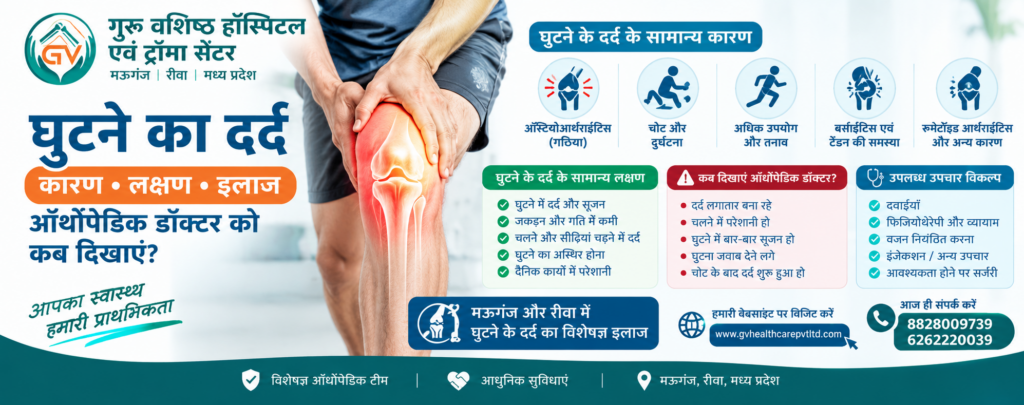
घुटने का दर्द: कारण, लक्षण और ऑर्थोपेडिक डॉक्टर को कब दिखाएं
घुटने का दर्द एक आम समस्या है, जो अलग-अलग उम्र के लोगों को प्रभावित कर सकती है। यह उम्र बढ़ने के साथ होने वाले जोड़ों में बदलाव, गठिया (Arthritis), बार-बार पड़ने वाले दबाव या किसी चोट के कारण हो सकता है। कभी-कभी गिरने, पैर मुड़ने, खेल के दौरान चोट लगने या दुर्घटना के बाद अचानक घुटने में दर्द शुरू हो जाता है।
हल्का घुटने का दर्द कुछ मामलों में उचित आराम और गतिविधियों में बदलाव से बेहतर हो सकता है। लेकिन यदि दर्द लगातार बना रहे, बार-बार हो, घुटने में सूजन या जकड़न हो, चलने में परेशानी हो या घुटना अस्थिर महसूस हो, तो चिकित्सकीय जांच आवश्यक हो सकती है।
यदि आपको लगातार घुटने में दर्द हो रहा है, तो उसके संभावित कारणों को समझना और यह जानना महत्वपूर्ण है कि ऑर्थोपेडिक डॉक्टर को कब दिखाना चाहिए।
घुटने का दर्द क्या है?
घुटना शरीर का एक महत्वपूर्ण और जटिल जोड़ है। इसमें जांघ की हड्डी (Femur), पैर की हड्डियों (Tibia और Fibula), घुटने की टोपी (Patella), कार्टिलेज, मेनिस्कस, लिगामेंट और टेंडन जैसी संरचनाएं शामिल होती हैं।
इनमें से किसी भी संरचना में चोट, सूजन या अन्य समस्या होने पर घुटने में दर्द हो सकता है।
घुटने का दर्द निम्न परिस्थितियों में महसूस हो सकता है:
- चलने के दौरान
- सीढ़ियां चढ़ने या उतरने में
- लंबे समय तक बैठने के बाद
- उठने-बैठने या स्क्वाट करने में
- दौड़ने या व्यायाम करते समय
- चोट या दुर्घटना के बाद
- घुटने में गठिया होने पर
- घुटने में सूजन या जकड़न के साथ
एक जैसे लक्षण अलग-अलग समस्याओं के कारण हो सकते हैं। इसलिए केवल लक्षणों के आधार पर स्वयं बीमारी का निदान करना उचित नहीं है।
घुटने के दर्द के सामान्य कारण
1. घुटने का ऑस्टियोआर्थराइटिस (Osteoarthritis)
उम्र बढ़ने के साथ घुटने के दर्द का एक सामान्य कारण ऑस्टियोआर्थराइटिस हो सकता है। इसमें जोड़ के अंदर मौजूद सुरक्षात्मक कार्टिलेज और अन्य संरचनाओं में बदलाव होने से दर्द, जकड़न और चलने-फिरने में परेशानी हो सकती है।
इसके सामान्य लक्षणों में शामिल हैं:
- चलते समय घुटने में दर्द
- सीढ़ियां चढ़ने या उतरने में दर्द
- घुटने में जकड़न
- सूजन
- घुटने की गति कम होना
- दबाने पर दर्द या संवेदनशीलता
- घुटने में चरचराहट या आवाज महसूस होना
- दैनिक कार्यों में परेशानी
उम्र, पिछली चोट, अधिक वजन और घुटने पर लंबे समय तक पड़ने वाला अतिरिक्त दबाव ऑस्टियोआर्थराइटिस के जोखिम से जुड़े हो सकते हैं।
2. घुटने में चोट
गिरने, पैर मुड़ने, खेल के दौरान चोट लगने या दुर्घटना से घुटने की अंदरूनी संरचनाओं को नुकसान पहुंच सकता है।
संभावित समस्याओं में शामिल हैं:
- लिगामेंट की चोट
- मेनिस्कस की चोट
- टेंडन की चोट
- कार्टिलेज को नुकसान
- मोच या खिंचाव
- घुटने की टोपी का अपनी जगह से खिसकना
यदि चोट लगने के बाद तेज दर्द, अधिक सूजन, घुटने का अस्थिर होना या पैर पर वजन रखने में परेशानी हो, तो चिकित्सकीय जांच कराना चाहिए।
3. अत्यधिक उपयोग और बार-बार पड़ने वाला दबाव
दौड़ना, कूदना, लगातार स्क्वाट करना, लंबे समय तक घुटनों के बल काम करना या अचानक व्यायाम की मात्रा बढ़ा देना घुटने पर अतिरिक्त दबाव डाल सकता है।
इससे घुटने के आसपास या घुटने की टोपी के पास दर्द हो सकता है।
जो लोग अचानक अपनी physical activity या exercise बढ़ा देते हैं, उनमें भी घुटने की समस्या विकसित हो सकती है।
4. बर्साइटिस (Bursitis)
घुटने के आसपास छोटी-छोटी fluid-filled sacs होती हैं जिन्हें bursae कहा जाता है। ये हड्डियों और आसपास के tissues के बीच घर्षण को कम करने में मदद करती हैं।
इनमें सूजन होने पर घुटने में दर्द और सूजन हो सकती है। घुटनों के बल बैठने या मोड़ने से दर्द बढ़ सकता है।
5. टेंडन की समस्या
टेंडन मांसपेशियों को हड्डियों से जोड़ते हैं। दौड़ने और कूदने जैसी बार-बार की जाने वाली गतिविधियों से कभी-कभी टेंडन में समस्या हो सकती है।
दर्द अक्सर घुटने की टोपी के आसपास या उसके नीचे महसूस हो सकता है और गतिविधि करने पर बढ़ सकता है।
6. रूमेटॉइड आर्थराइटिस और अन्य सूजन संबंधी समस्याएं
घुटने का दर्द कुछ inflammatory arthritis conditions के कारण भी हो सकता है।
इनमें दर्द, सूजन और जकड़न हो सकती है तथा एक से अधिक जोड़ प्रभावित हो सकते हैं।
यदि जोड़ों में लगातार या बिना स्पष्ट कारण के दर्द और सूजन है, तो चिकित्सकीय जांच कराना उचित है।
7. गाउट या जोड़ में संक्रमण
यदि घुटना अचानक बहुत दर्दनाक, गर्म, लाल और सूजा हुआ हो, तो इसके पीछे गाउट या जोड़ में संक्रमण जैसी समस्या भी हो सकती है।
यदि घुटने के दर्द के साथ बुखार, ठंड लगना या अस्वस्थ महसूस होना हो, तो जल्द चिकित्सकीय सहायता लेना महत्वपूर्ण है।
घुटने के दर्द के सामान्य लक्षण
घुटने की समस्या के कारण अलग-अलग लक्षण हो सकते हैं।
सामान्य लक्षणों में शामिल हैं:
- घुटने में दर्द
- घुटने में सूजन
- जकड़न
- घुटना मोड़ने या सीधा करने में परेशानी
- चलते समय दर्द
- सीढ़ियां चढ़ने में परेशानी
- बैठने या उठने में दर्द
- कमजोरी महसूस होना
- घुटना अस्थिर लगना
- घुटने का बार-बार जवाब देना या “मुड़ जाना”
- चलने-फिरने और दैनिक कार्यों में परेशानी
घुटने के दर्द के लिए ऑर्थोपेडिक डॉक्टर को कब दिखाएं?
हर प्रकार के घुटने के दर्द में तुरंत specialist consultation आवश्यक नहीं होती। लेकिन निम्न परिस्थितियों में डॉक्टर से जांच कराना उचित है।
1. घुटने का दर्द लगातार बना रहे
यदि घुटने का दर्द कई दिनों या हफ्तों तक बना रहता है या बार-बार वापस आता है, तो इसकी जांच करानी चाहिए। लगातार बने रहने वाले joint symptoms का चिकित्सकीय मूल्यांकन आवश्यक हो सकता है।
2. चलने में परेशानी हो
यदि दर्द के कारण सामान्य रूप से चलना, खड़ा होना या पैर पर वजन रखना मुश्किल हो रहा है, तो डॉक्टर से सलाह लें।
3. घुटने में बार-बार सूजन हो
बार-बार या बिना स्पष्ट कारण के होने वाली सूजन को नजरअंदाज नहीं करना चाहिए।
4. घुटना जवाब देने लगे
यदि चलते या खड़े होते समय घुटना बार-बार अस्थिर महसूस हो या जवाब देने लगे, तो ऑर्थोपेडिक evaluation की आवश्यकता हो सकती है।
5. घुटना मोड़ने या सीधा करने में परेशानी हो
यदि घुटने की movement सीमित हो गई है या घुटना पूरी तरह सीधा नहीं हो पा रहा है, तो चिकित्सकीय जांच कराएं।
6. चोट के बाद दर्द शुरू हुआ हो
गिरने, दुर्घटना, पैर मुड़ने या खेल के दौरान चोट लगने के बाद यदि दर्द, सूजन या movement की समस्या है, तो डॉक्टर को दिखाना चाहिए।
7. दर्द दैनिक जीवन को प्रभावित कर रहा हो
यदि घुटने का दर्द चलने, काम करने, सोने, सीढ़ियां चढ़ने या सामान्य दैनिक गतिविधियों को प्रभावित कर रहा है, तो medical evaluation लेना उचित है।
घुटने का दर्द कब Emergency हो सकता है?
निम्न परिस्थितियों में तुरंत चिकित्सकीय सहायता लेना जरूरी हो सकता है:
- घुटने पर वजन रखना संभव न हो।
- चोट के बाद बहुत तेज दर्द हो।
- घुटना बहुत अधिक सूज गया हो।
- घुटने का आकार बदल गया हो।
- घुटना lock हो गया हो और सामान्य रूप से हिल नहीं रहा हो।
- घुटना अचानक गर्म, लाल और बहुत दर्दनाक हो।
- घुटने के दर्द के साथ बुखार या ठंड लग रही हो।
- गंभीर चोट के बाद पैर में सुन्नपन या झनझनाहट हो।
ऐसे लक्षण गंभीर चोट या infection जैसी स्थिति से जुड़े हो सकते हैं और इन्हें नजरअंदाज नहीं करना चाहिए।
घुटने के दर्द की जांच कैसे की जाती है?
ऑर्थोपेडिक डॉक्टर सबसे पहले आपकी समस्या के बारे में जानकारी लेते हैं, जैसे:
- दर्द कब शुरू हुआ?
- क्या कोई चोट लगी थी?
- दर्द घुटने के किस हिस्से में है?
- कौन-सी गतिविधि से दर्द बढ़ता है?
- क्या सूजन होती है?
- क्या घुटना जकड़ता है?
- क्या घुटना जवाब देता है?
- क्या पहले भी घुटने की समस्या रही है?
इसके बाद डॉक्टर घुटने की movement, stability, swelling और tenderness की जांच कर सकते हैं।
लक्षण और clinical examination के आधार पर डॉक्टर जरूरत पड़ने पर X-ray या अन्य imaging tests की सलाह दे सकते हैं। हर मरीज को हर प्रकार की जांच की आवश्यकता नहीं होती।
घुटने के दर्द का इलाज
घुटने के दर्द का इलाज उसके वास्तविक कारण, लक्षणों की गंभीरता, उम्र, physical activity और सामान्य स्वास्थ्य पर निर्भर करता है।
1. गतिविधियों में बदलाव
ऐसी गतिविधियों को कुछ समय के लिए कम करना उपयोगी हो सकता है जिनसे दर्द बढ़ता है। हालांकि, हर स्थिति में पूरी तरह movement बंद करना उचित नहीं होता।
2. दवाएं
डॉक्टर मरीज की स्थिति और medical history के अनुसार दर्द या सूजन के लिए उपयुक्त दवाओं की सलाह दे सकते हैं।
बिना चिकित्सकीय सलाह के लंबे समय तक painkillers लेना उचित नहीं है, विशेषकर यदि आपको कोई अन्य बीमारी है या आप पहले से कोई दवा ले रहे हैं।
3. फिजियोथेरेपी और व्यायाम
उचित exercises घुटने के आसपास की मांसपेशियों को मजबूत करने, flexibility सुधारने और joint function को बेहतर बनाने में मदद कर सकती हैं।
Exercise का प्रकार व्यक्ति की समस्या और diagnosis के अनुसार होना चाहिए।
4. वजन नियंत्रित करना
यदि व्यक्ति का वजन अधिक है और उसे knee osteoarthritis है, तो स्वस्थ वजन बनाए रखने से weight-bearing joints पर पड़ने वाला दबाव कम हो सकता है और symptoms में सुधार हो सकता है।
5. Injection या अन्य उपचार
कुछ परिस्थितियों में डॉक्टर injection या अन्य specialist treatment options पर विचार कर सकते हैं। यह निर्णय मरीज की स्थिति और diagnosis पर निर्भर करता है।
6. Surgery
हर घुटने के दर्द में surgery की आवश्यकता नहीं होती।
लेकिन यदि घुटने में गंभीर structural damage या advanced joint disease है और non-surgical treatment से पर्याप्त लाभ नहीं मिल रहा है, तो orthopedic surgeon surgical options पर चर्चा कर सकते हैं।
कुछ selected patients में गंभीर knee joint damage के कारण knee replacement surgery पर विचार किया जा सकता है।
क्या घुटने का दर्द होने पर Knee Replacement जरूरी है?
नहीं। घुटने में दर्द होने का मतलब यह नहीं है कि हर व्यक्ति को knee replacement की आवश्यकता होगी।
Knee replacement का निर्णय कई बातों पर निर्भर करता है, जैसे:
- बीमारी का वास्तविक कारण
- घुटने के joint को हुआ नुकसान
- दर्द की गंभीरता
- समस्या कितने समय से है
- दैनिक जीवन पर प्रभाव
- non-surgical treatment से मिला लाभ
- clinical examination और imaging findings
- मरीज का सामान्य स्वास्थ्य
ऑर्थोपेडिक विशेषज्ञ इन सभी बातों का मूल्यांकन करके उपयुक्त treatment options समझा सकते हैं।
घुटनों को स्वस्थ रखने के लिए क्या करें?
घुटने के स्वास्थ्य के लिए कुछ सामान्य उपाय उपयोगी हो सकते हैं:
- स्वस्थ वजन बनाए रखें।
- अपनी क्षमता के अनुसार नियमित physical activity करें।
- घुटने के आसपास की muscles को मजबूत करें।
- व्यायाम से पहले उचित warm-up करें।
- exercise की intensity धीरे-धीरे बढ़ाएं।
- अचानक बहुत ज्यादा running या jumping शुरू न करें।
- अपनी गतिविधि के अनुसार उचित footwear पहनें।
- खेल या physical work के दौरान चोट से बचने के लिए उचित सावधानी रखें।
- गंभीर चोट लगने पर समय पर medical advice लें।
व्यायाम का चुनाव व्यक्ति की उम्र, स्वास्थ्य और घुटने की समस्या के अनुसार किया जाना चाहिए।
मऊगंज और रीवा में घुटने के दर्द का इलाज
यदि आपको मऊगंज या रीवा में घुटने का दर्द है, तो ऑर्थोपेडिक डॉक्टर से जांच कराने पर दर्द के संभावित कारण को समझने और उचित treatment plan बनाने में मदद मिल सकती है।
गुरु वशिष्ठ हॉस्पिटल एवं ट्रॉमा सेंटर, मऊगंज में हड्डियों, जोड़ों, fractures और musculoskeletal problems से संबंधित orthopedic और trauma care उपलब्ध है।
घुटने में दर्द वाले मरीजों में डॉक्टर निम्न समस्याओं का मूल्यांकन कर सकते हैं:
- घुटने का गठिया (Knee Arthritis)
- घुटने की चोट
- घुटने और जोड़ का दर्द
- लिगामेंट और soft-tissue injuries
- fracture
- घुटने की stiffness
- उम्र से संबंधित घुटने की समस्याएं
उपचार मरीज की व्यक्तिगत स्थिति और clinical assessment के आधार पर तय किया जाता है।
यदि किसी मरीज को surgical treatment की आवश्यकता हो सकती है, तो orthopedic specialist यह मूल्यांकन कर सकते हैं कि surgery या कोई अन्य treatment option उपयुक्त है या नहीं।
घुटने के दर्द से जुड़े अक्सर पूछे जाने वाले प्रश्न (FAQs)
क्या घुटने का दर्द हमेशा गठिया के कारण होता है?
नहीं। घुटने का दर्द चोट, ligament या meniscus की समस्या, tendon की समस्या, bursitis, arthritis और अन्य कारणों से भी हो सकता है।
घुटने के दर्द में ऑर्थोपेडिक डॉक्टर को कब दिखाना चाहिए?
यदि दर्द लगातार बना रहता है, बार-बार होता है, चलने या दैनिक कार्यों को प्रभावित करता है, सूजन या instability होती है या चोट के बाद दर्द शुरू हुआ है, तो डॉक्टर से जांच कराना उचित है।
क्या घुटने के दर्द का इलाज बिना surgery के हो सकता है?
कई प्रकार की knee problems में surgery के बिना treatment किया जा सकता है। इसमें activity modification, medicines, physiotherapy, exercises और अन्य उपचार शामिल हो सकते हैं। उपचार बीमारी के कारण पर निर्भर करता है।
क्या हर knee arthritis patient को knee replacement की जरूरत होती है?
नहीं। हर arthritis patient को knee replacement की आवश्यकता नहीं होती। यह निर्णय symptoms, joint damage, दैनिक गतिविधियों पर प्रभाव और अन्य treatments के response के आधार पर किया जाता है।
क्या exercise घुटने के दर्द में मदद कर सकती है?
उचित और व्यक्ति की स्थिति के अनुसार किया गया exercise program कई knee conditions में muscle strength, movement और function को बेहतर करने में मदद कर सकता है। लेकिन बहुत तेज या गलत exercise से बचना चाहिए।
मऊगंज में घुटने के दर्द का इलाज कहां कराएं?
यदि आप मऊगंज में घुटने के दर्द का इलाज ढूंढ रहे हैं, तो घुटने के दर्द के कारण और उचित treatment options जानने के लिए ऑर्थोपेडिक डॉक्टर से consultation लिया जा सकता है।
गुरु वशिष्ठ हॉस्पिटल एवं ट्रॉमा सेंटर, मऊगंज, रीवा, मध्य प्रदेश में orthopedic और trauma-related healthcare services उपलब्ध हैं।
निष्कर्ष
घुटने का दर्द सामान्य strain, चोट, arthritis या किसी अन्य underlying condition के कारण हो सकता है। कुछ हल्की समस्याएं उचित देखभाल से बेहतर हो सकती हैं, लेकिन लगातार, गंभीर या बार-बार होने वाले घुटने के दर्द को नजरअंदाज नहीं करना चाहिए।
समय पर medical evaluation से समस्या के संभावित कारण की पहचान करने और उचित treatment options तय करने में मदद मिल सकती है।
यदि आपको लगातार घुटने में दर्द, सूजन, चलने में परेशानी, घुटने का अस्थिर होना या चोट के बाद दर्द है, तो उचित चिकित्सकीय जांच के लिए ऑर्थोपेडिक डॉक्टर से सलाह लें।
गुरु वशिष्ठ हॉस्पिटल एवं ट्रॉमा सेंटर, मऊगंज, रीवा, मध्य प्रदेश
संपर्क: 8828009739 | 6262220039
वेबसाइट: gvhealthcarepvtltd.com
Knee Pain: Causes, Symptoms and When to See an Orthopedic Doctor
Knee pain is a common problem that can affect people of different ages. It may develop gradually because of age-related joint changes, arthritis or repeated stress, or it may occur suddenly after a fall, sports injury, twisting movement or accident.
Sometimes mild knee pain improves with appropriate rest and activity modification. However, persistent or severe pain, swelling, stiffness, instability or difficulty walking may require medical evaluation.
If you are experiencing ongoing knee pain, understanding its possible causes and knowing when to consult an orthopedic doctor can help you seek appropriate care at the right time.
What Is Knee Pain?
The knee is a complex joint that connects the thigh bone (femur) with the shin bones (tibia and fibula). It also includes the kneecap (patella), cartilage, menisci, ligaments, tendons and other soft tissues.
Pain can come from any of these structures. The symptoms and treatment depend on the underlying cause.
Knee pain may occur:
- After an injury or accident
- During walking or climbing stairs
- After prolonged sitting
- During squatting or kneeling
- While running or exercising
- Because of arthritis or age-related changes
- Along with swelling, stiffness or difficulty moving the knee
Because different conditions can produce similar symptoms, self-diagnosis is not always reliable. A doctor can evaluate the symptoms and determine whether further examination or imaging is needed.
Common Causes of Knee Pain
1. Osteoarthritis of the Knee
Osteoarthritis is one of the common causes of knee pain, particularly with increasing age. It involves changes and damage to the cartilage and other structures of the joint.
Common symptoms may include:
- Knee pain while walking
- Pain while climbing or descending stairs
- Joint stiffness
- Swelling
- Reduced movement
- Tenderness
- Grating or crackling sensations
- Difficulty performing everyday activities
Previous knee injuries, increasing age, body weight, repetitive stress and certain inherited or structural factors can increase the risk of knee osteoarthritis.
2. Knee Injury
A sudden fall, twisting movement, sports injury or accident can damage structures inside or around the knee.
Possible injuries include:
- Ligament injuries
- Meniscus tears
- Tendon injuries
- Cartilage damage
- Knee sprains and strains
- Kneecap dislocation
A popping sensation at the time of injury, significant swelling, instability or inability to straighten the knee may require medical assessment.
3. Overuse and Repetitive Stress
Activities involving repeated running, jumping, squatting, kneeling or other repetitive movements can place additional stress on the knee.
This can cause pain around the kneecap or tendons and may become worse when the activity is repeated.
People who suddenly increase their exercise or physical workload may also develop knee symptoms.
4. Bursitis
Small fluid-filled sacs called bursae help reduce friction around joints. Inflammation of these structures can cause pain and swelling around the knee.
Pain may become more noticeable with kneeling or bending.
5. Tendon Problems
Tendons connect muscles to bones. Repetitive activities such as running and jumping can sometimes cause tendon-related knee pain.
Pain may be felt around the kneecap or below it and may become worse with activity.
6. Rheumatoid Arthritis and Other Inflammatory Conditions
Knee pain can sometimes be associated with inflammatory forms of arthritis.
These conditions may cause pain, swelling and stiffness and may affect more than one joint. Persistent or unexplained joint symptoms should be medically evaluated rather than self-diagnosed.
7. Gout or Joint Infection
A knee that suddenly becomes extremely painful, hot, red and swollen can sometimes be associated with gout or an infection in the joint.
If knee pain is accompanied by fever, chills or feeling generally unwell, prompt medical attention is important.
Symptoms of Knee Pain
Knee problems can produce different symptoms depending on their cause.
Common symptoms include:
- Pain in or around the knee
- Swelling
- Stiffness
- Difficulty bending or straightening the knee
- Pain while walking
- Pain while climbing stairs
- Difficulty squatting
- Knee weakness
- A feeling that the knee may give way
- Clicking or other sensations during movement
- Reduced ability to perform daily activities
The presence and severity of these symptoms can help a doctor determine what further evaluation may be required.
When Should You See an Orthopedic Doctor for Knee Pain?
Not every episode of knee pain requires immediate specialist consultation. However, you should consider medical evaluation when:
Persistent Knee Pain
If your knee pain continues or repeatedly returns despite appropriate self-care and activity modification, it is worth getting evaluated.
Difficulty Walking
Pain that makes it difficult to walk normally, stand or put weight on the affected leg should not be ignored.
Repeated Knee Swelling
Repeated or unexplained swelling may indicate an underlying joint or soft-tissue problem.
Knee Giving Way
If your knee repeatedly feels unstable or gives way while standing or walking, an orthopedic evaluation may be appropriate.
Difficulty Moving the Knee
If you cannot properly bend or straighten the knee, medical assessment may be needed.
Pain After an Injury
Knee pain following a fall, accident, twisting injury or sports injury should be evaluated if the pain is significant, swelling develops or normal movement is affected.
Pain Affecting Daily Life
If knee pain interferes with walking, working, sleeping, climbing stairs or other normal activities, consult a healthcare professional.
When Is Knee Pain an Emergency?
Seek prompt medical attention if:
- You cannot put weight on the affected leg.
- The knee is severely swollen or has changed shape.
- You have severe pain after a significant injury.
- The knee becomes hot, red and very painful.
- You develop fever or chills along with knee pain.
- The knee becomes locked and cannot be moved normally.
- You experience significant numbness or other concerning symptoms after an injury.
These symptoms can sometimes indicate a significant injury, dislocation or infection and should not be ignored.
How Is Knee Pain Diagnosed?
An orthopedic doctor generally begins with a detailed discussion about:
- When the pain started
- Whether there was an injury
- Location and nature of the pain
- Activities that make the pain worse
- Swelling or stiffness
- Previous knee problems
- Medical history
The doctor may examine the knee’s movement, stability, swelling and tenderness.
Depending on the suspected cause, investigations such as an X-ray or other imaging tests may be recommended. For example, X-rays can help identify changes associated with knee osteoarthritis.
Not every patient needs every test. The appropriate investigation depends on the individual’s symptoms and clinical examination.
Treatment Options for Knee Pain
Treatment depends on the cause, severity of symptoms, age, activity level and overall health.
Possible treatment approaches include:
Activity Modification
Temporarily reducing activities that increase pain may help the knee settle. However, prolonged complete inactivity is not appropriate for every knee condition.
Medicines
A doctor may recommend appropriate medicines for pain or inflammation depending on the patient’s condition and medical history.
Do not take pain medicines regularly without appropriate medical advice, particularly if you have other medical conditions or take other medicines.
Physiotherapy and Exercises
Specific exercises may help improve muscle strength, flexibility and knee function.
A physiotherapist or doctor can recommend exercises according to the underlying condition.
Weight Management
For people with knee osteoarthritis who are overweight, achieving and maintaining a healthy weight can reduce stress on weight-bearing joints and may help improve symptoms.
Injections or Other Treatments
Depending on the diagnosis, a doctor may discuss additional treatments, including injections or other specialist procedures.
Surgery
Surgery is not necessary for every person with knee pain.
However, when significant structural damage or advanced joint disease causes persistent symptoms and non-surgical treatment is not sufficient, an orthopedic surgeon may discuss surgical options.
In selected patients with severe knee joint damage, knee replacement surgery may be considered after appropriate evaluation.
Knee Pain and Knee Replacement: When Is It Considered?
Many people with knee pain immediately worry that they will need knee replacement surgery. Knee pain does not automatically mean that knee replacement is required.
The decision depends on several factors, including:
- The underlying diagnosis
- Severity of joint damage
- Duration and severity of symptoms
- Effect on daily activities
- Response to non-surgical treatment
- Overall health
- Clinical and imaging findings
An orthopedic specialist can evaluate the condition and explain the appropriate treatment options.
How Can You Help Prevent Knee Problems?
Some general measures may help support knee health:
- Maintain a healthy body weight.
- Stay physically active according to your ability.
- Strengthen the muscles around the knee.
- Warm up before strenuous exercise.
- Increase exercise intensity gradually.
- Avoid suddenly increasing running or jumping activities.
- Use appropriate footwear for your activities.
- Take appropriate precautions during sports and physical work.
- Seek medical advice after significant knee injuries.
Exercise programs should be selected according to your health and the cause of your knee symptoms.
Knee Pain Treatment in Mauganj and Rewa
If you are experiencing knee pain in Mauganj or Rewa, an orthopedic evaluation can help identify the possible cause and appropriate treatment options.
At Guru Vashisht Hospital & Trauma Center, Mauganj, orthopedic care is available for conditions involving bones, joints, fractures and musculoskeletal problems.
Patients with knee pain may require evaluation for conditions such as:
- Knee arthritis
- Knee injuries
- Joint pain
- Ligament and soft-tissue injuries
- Fractures
- Knee stiffness
- Age-related knee problems
The appropriate treatment depends on the individual patient’s condition and clinical assessment.
For patients who may require surgical treatment, the orthopedic team can evaluate whether surgery or other treatment options are appropriate.
Frequently Asked Questions About Knee Pain
Is knee pain always caused by arthritis?
No. Knee pain can have many causes, including injuries, ligament or meniscus problems, tendon problems, bursitis, arthritis and other conditions.
When should I see an orthopedic doctor for knee pain?
Consider consulting a doctor if the pain persists, repeatedly returns, affects walking or daily activities, causes swelling or instability, or occurs after a significant injury.
Can knee pain be treated without surgery?
Many knee conditions can be managed without surgery using appropriate activity modification, medicines, physiotherapy, exercises and other treatments. The treatment depends on the diagnosis.
Does every knee arthritis patient need knee replacement?
No. Knee replacement is not required for every person with arthritis. Treatment depends on the severity of the condition, symptoms, functional limitations and response to other treatments.
Can exercise help knee pain?
Appropriate exercise can help improve muscle strength, joint movement and overall function for many knee conditions. However, exercises should be appropriate for the individual’s condition and should not be used to ignore severe or worsening symptoms.
Where can I get knee pain treatment in Mauganj?
Patients looking for knee pain treatment in Mauganj can consult an orthopedic doctor for evaluation and treatment planning at Guru Vashisht Hospital & Trauma Center, Mauganj.
Conclusion
Knee pain can result from a simple strain, an injury, arthritis or another underlying condition. While some mild problems may improve with appropriate self-care, persistent, severe or recurrent knee pain should not be ignored.
Early medical evaluation can help identify the possible cause and determine whether treatment such as medicines, physiotherapy, exercises, injections or surgery may be appropriate.
If you are experiencing persistent knee pain, difficulty walking, swelling, instability or pain following an injury, consider consulting an orthopedic doctor for proper evaluation.
Guru Vashisht Hospital & Trauma Center, Mauganj, Rewa, Madhya Pradesh provides orthopedic and trauma-related healthcare services for patients in Mauganj and surrounding areas.
Contact: 8828009739 | 6262220039
Website: gvhealthcarepvtltd.com